























Launched in 2013 by Vietnamese developer Nguyen Ha Dong, Flappy Bird quickly became a global phenomenon. With just a tap-to-flap mechanism, the game has made millions of people both fascinated and frustrated every time the bird... hits its head on a water pipe.
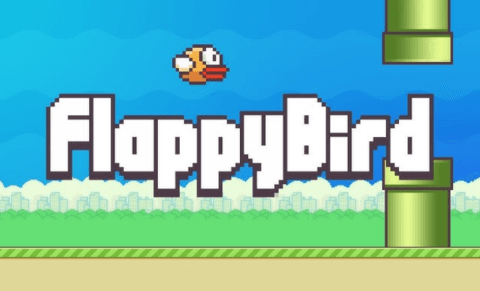
Flappy Bird gameplay
You control a chubby yellow bird, trying to weave through a series of staggered green water pipes.
- Tap the screen to make the bird flap its wings and fly up.
- Release your hand to make the bird fall down by inertia.
- Each pipe gap passed is counted as 1 point.
- Just one wrong tap, the bird will hit the pipe or fall to the ground, and the game ends immediately.
Flappy Bird survival tips
- Keep the height at the mouth of the pipe —this is the safest distance to adjust in time when the next pipe gap is unusually low or high.
- Don't try to jump too close to the pipe; adding a buffer helps you avoid flapping too hard, causing the bird to hit its head on the pipe above.
- Focusing on the next pipe, rather than the score, helps you maintain your rhythm; the more you look at the score, the easier it is to lose it.
- Practice your hand rhythm with the same device—Flappy Bird reacts differently to different touch screens, so getting used to one device will make it easier to control.
- Keep a steady breathing rhythm —it sounds strange, but this helps your hand press evenly and not jerk in tense moments.
Why is Flappy Bird “addictive”?
The combination of minimalist controls, extreme difficulty and “just one more try” makes Flappy Bird a never-ending reflex challenge. There are no extra lives, no checkpoints—just you, the bird and endless pipes.
Flappy Bird is proof that you don’t need flashy 3D graphics or an epic storyline to have a simple but unique idea create a global phenomenon. Although it has disappeared from app stores, this game lives on as an icon of mobile gaming in the 2010s. If you like new and more modern challenges, then come to Red Ball 4.



Skip It!
3.3